

Key points
- Residential LBTT, excluding Additional Dwelling Supplement (ADS), was £36.0m in March 2026. This was 17% higher than in February 2026 (£30.9m) and 7% higher than in March 2025 (£33.7m).
- Non-residential LBTT, excluding ADS, was £19.1m in March 2026. This was 37% higher than February 2026 (£13.9m) and 28% lower than March 2025 (£26.6m). Non-residential revenues are highly variable between months because of small numbers of high value transactions.
- Gross Additional Dwelling Supplement for February was £20.4m, 10% higher than February 2026 (£18.6m) and 3% lower than in March 2025 (£21.0m). The ADS rate changed from 6% to 8% where the contract for the transaction was entered into after 4 December 2024.
Introduction
This publication is part of a monthly series of Land and Building Transaction Tax (LBTT) statistics, started in April 2015, which provides data on the number and value of notifiable transactions reported to Revenue Scotland.
An official statistics publication for Scotland
These statistics are official statistics. Official statistics are statistics that are produced by crown bodies, those acting on behalf of crown bodies, or those specified in statutory orders, as defined in the Statistics and Registration Service Act 2007.
Revenue Scotland statistics are regulated by the Office for Statistics Regulation (OSR). OSR sets the standards of trustworthiness, quality and value in the Code of Practice for Statistics that all producers of official statistics should adhere to.
Residential LBTT
Residential LBTT, excluding Additional Dwelling Supplement (ADS), was £36.0 million in March 2026. This is a 17% increase compared to February 2026 (£30.9 million).
Figure 1: Line chart displaying residential LBTT, excluding ADS, by month, April 2015 – March 2026.
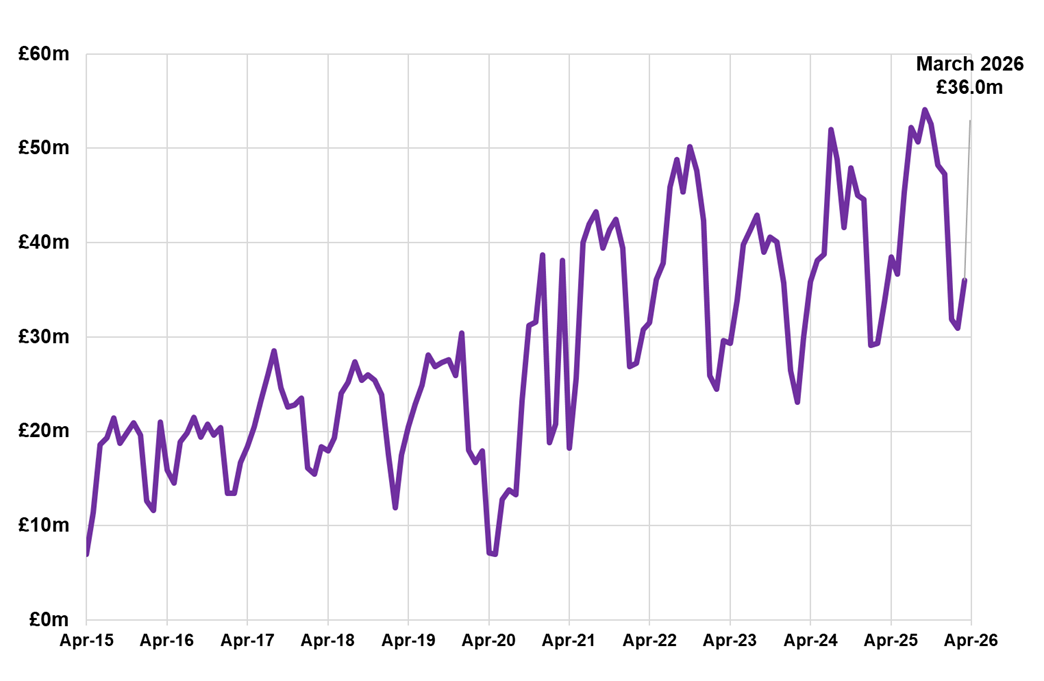
Residential LBTT, excluding ADS, in March 2026 was 17% higher than in February 2026 (£30.9m). Typically, January and February are a low point in the year for both residential LBTT revenue and residential LBTT returns submitted, with both being consistently higher in March compared to February.
Residential LBTT, excluding ADS, in March 2026, was 7% higher than in March 2025 (£33.7m) and was the second highest figure for any month of March, the highest being March 2021 (£38.1m).
Residential LBTT returns in March 2026 (7,840) increased by 1% compared with last March (7,760).
Figure 2: Column chart showing residential LBTT returns submitted in March each year, 2015-2026.
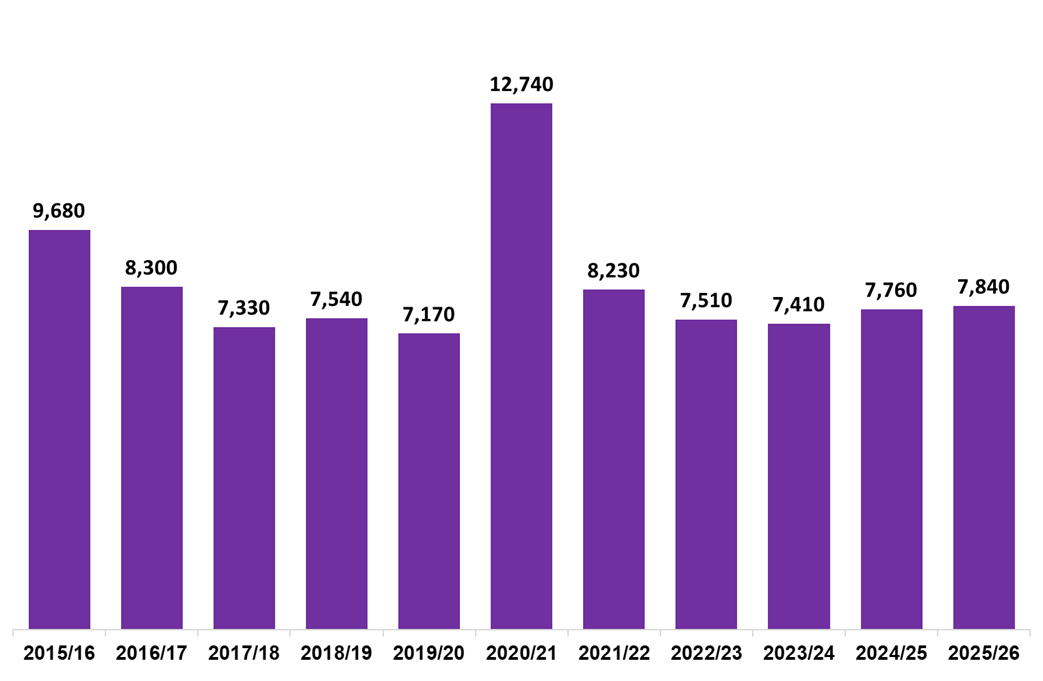
There were 7,840 residential LBTT returns submitted in March 2026, 1% higher than were submitted in March 2025 (7,760). The number of residential LBTT returns submitted in the month of March has been relatively consistent over recent years after a spike in the number of residential LBTT returns submitted in March 2021 (12,740 returns).
March 2026 had the lowest number of returns in the nil-rate (£0 - £145,000) LBTT band, for any month of March, with 2,610 returns.
In contrast, March 2026 had the second highest number of residential returns for any March in the £250,001 to £325,000 band (1,240 returns), the £325,001 to £750,000 band (1,400 returns) and the over £750,000 band (90 returns). March 2021 had the highest number of residential returns in each case.
Non-Residential LBTT, excluding ADS
Non-residential LBTT, excluding ADS, was £19.1 million in March 2026.
Figure 3: Line chart displaying non-residential LBTT, excluding ADS, by month, April 2015 – March 2026
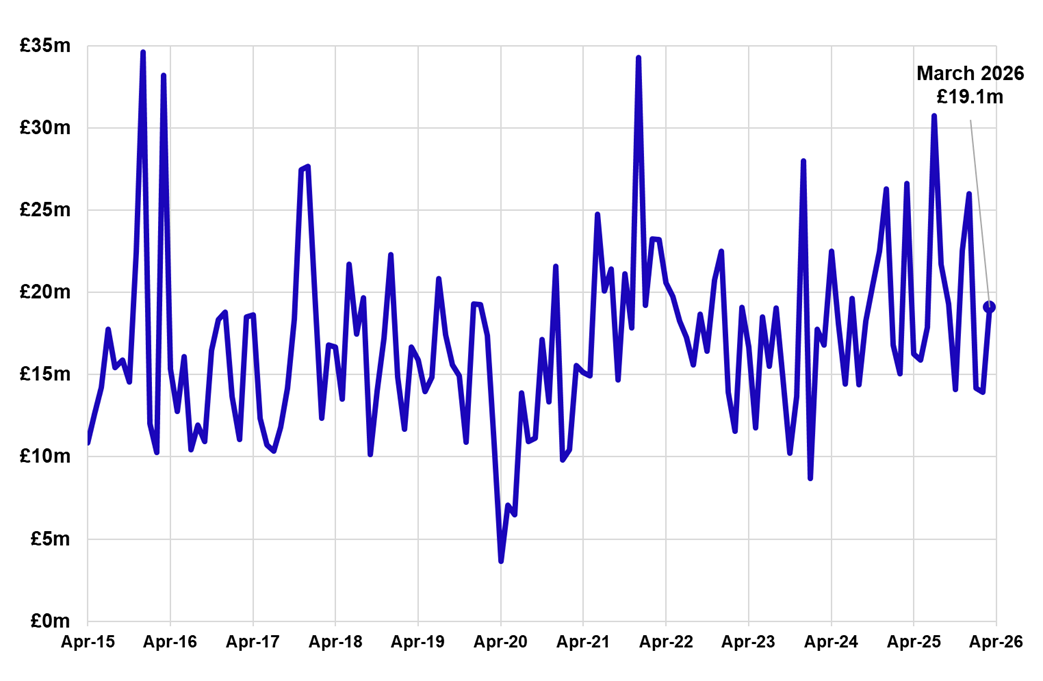
Non-residential LBTT, excluding ADS, was 37% higher in March 2026 (£19.1m) than in February 2026 (£13.9m) and 28% lower than in March 2025 (£26.6m). Non-residential revenues are highly variable between months because of small numbers of high value transactions.
The number of non-residential conveyance returns submitted in March 2026 (760) increased by 46% compared to February 2026 (520). Leases increased by 15% and lease reviews increased by 10% compared to the previous month.
Figure 4: Line chart displaying the number of non-residential LBTT returns submitted, by type of return, by month, March 2025 – March 2026.
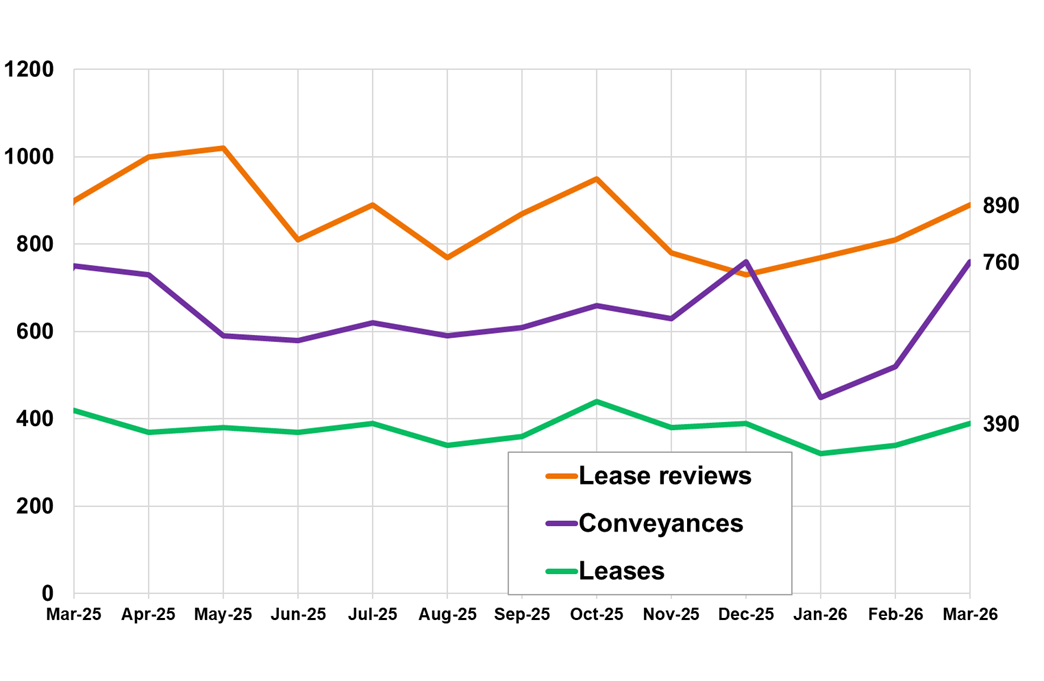
Non-residential conveyance returns increased by 46% in March 2026 (760 returns) compared to February 2026 (520 returns).
The number of new leases increased by 15% (390 returns) compared to February 2026 (340 returns). It is the joint second lowest number of new leases for any March (joint with March 2024). March 2020 had the lowest number of new leases (340 returns).
Lease review returns increased by 10% compared to February 2026 (lease review returns include 3-year, 6-year and 9-year lease reviews, as well as assignation and termination returns).
Additional Dwelling Supplement (ADS)
The number of LBTT returns received which declared ADS due was 1,730 in March 2026. This is 18% higher than in February 2026 and 6% higher than in March of the previous year.
Figure 5: Column chart displaying the number of LBTT returns received which declared ADS due, for each month of March, 2017-2026.
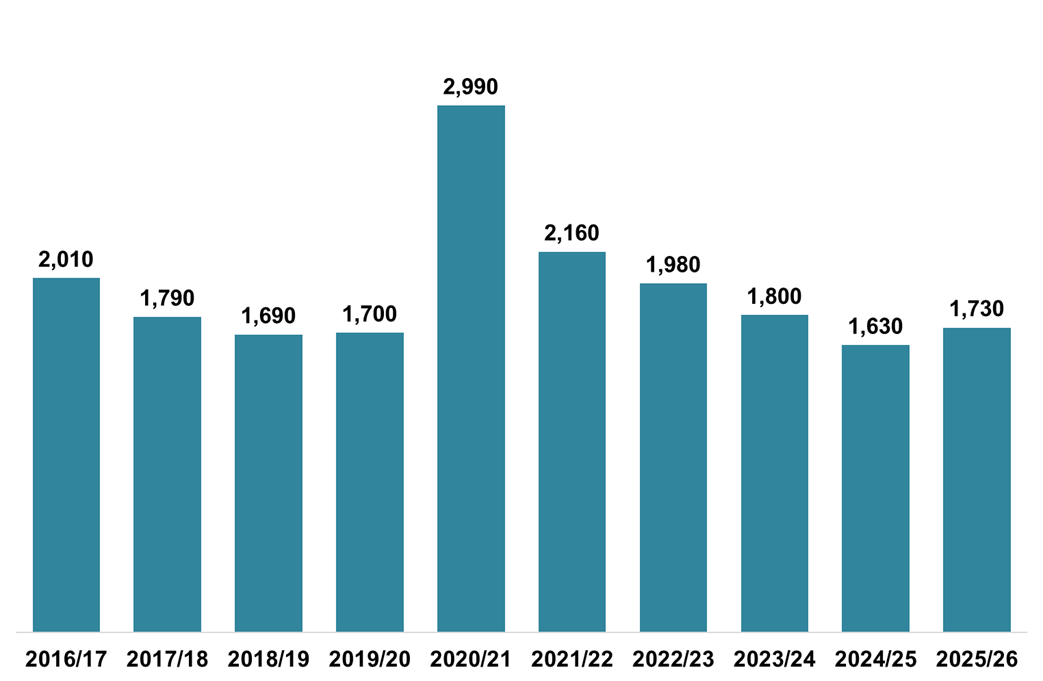
The number of returns with ADS due was 1,730 in March 2026. March 2021 had the highest number of returns with ADS due, with 2,990. The number of returns with ADS due has decreased each year since March 2021 until March 2025. March 2026 had a 6% increase compared to the previous month.
Gross ADS declared in March 2026 was £20.4 million.
Figure 6: Column chart displaying gross ADS declared due in each month of March, 2017-2026.
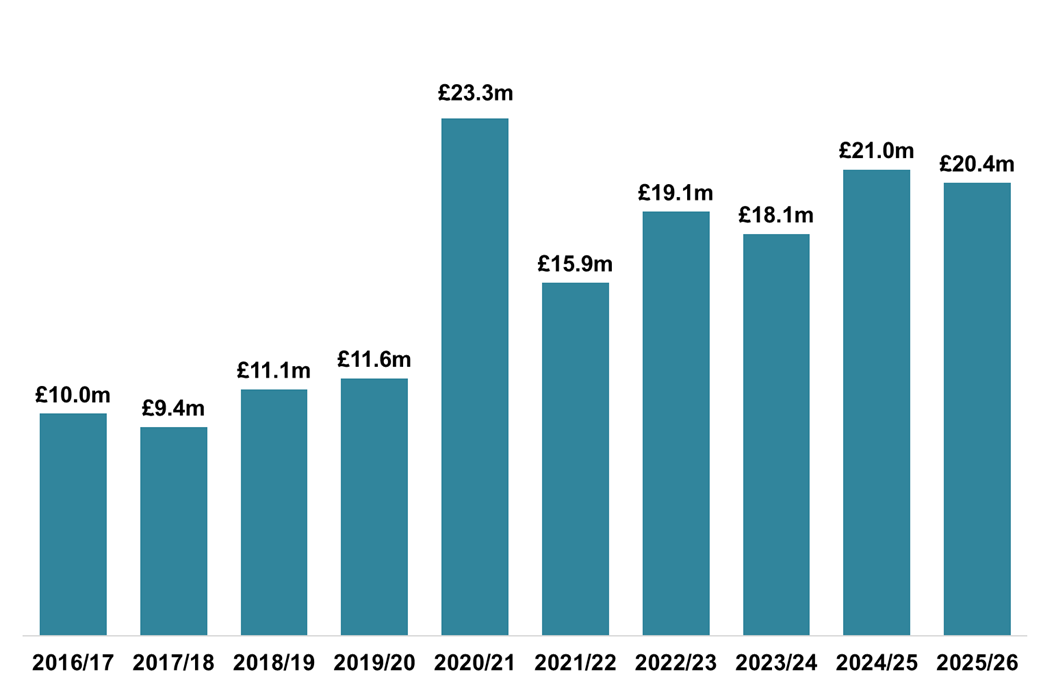
Gross ADS in March 2026 (£20.4m) was the third highest of all previous months of March after March 2021 (£23.3 million) and March 2025 (£21.0m). The high gross ADS is mainly due to the increase in the rate of ADS from 6% to 8% for conveyances with a contract date after 4 December 2024.
Tell us what you think
We are always interested to hear from our users about how our statistics are used, and how they can be improved.
Enquiries
For enquiries about this publication please contact:
statistics@revenue.scot